The Eastern Territories
I mentioned a while back that I was thinking about an oldschool (or oldschool-ish, if I'm honest) D&D hack. Naturally, I've also been considering a setting to go along with it. I want to get away from the dungeon fantasy kitchen sink of WotC and broader geek culture for a bit, as I feel like that level of fantasy overload is kinda deadening my wonder-sense, you know?
At the same time, I don't wanna run HârnWorld, you know? I'm not looking to take out all the magic and replace it with well-researched Medieval realism. Instead, I'm taking inspiration from things like Dark Souls, Blasphemous, A Song of Ice and Fire, The Black Company, The Old Kingdom, Berserk, Mork Borg, Warhammer Fantasy—you probably get the idea: more of a dark fantasy direction. I figure that fits the high lethality of oldschool games, and I'm always predisposed to bending everything towards horror anyway.
Also, I feel like a really important part of getting away from the popular dungeon fantasy subgenre is getting away from the elves and dwarves and other Tolkienesque "demihumans". My own preference with playable species in RPGs is to either go all humans, or else go way in the other direction and throw in all kinds of weird and interesting options. I did the latter with that Zoteris setting, but for this one I'm doing the former. I want a simple system, I want to increase the impact of fantastic creatures, and also I want to get away from this weird vibe you get in a lot of fantasy RPGs where nonhuman sapients sorta stand in for different human ethnic groups.
I'm also not really into the folkloric or mythic corner of the fantasy genre, nor the poetic understanding of reality that goes along with that. I think I'd also like to avoid incorporating monsters, etc. from real cultures' legends. I'm a big believer in the classical definition of "high fantasy", for which the defining characteristic is a setting that is explicitly not Earth. I guess I'm into settings that are basically extremely soft science fiction pretending to be fantasy. (And ending up as horror.)
So that's my starting trajectory on this thing.
Geography
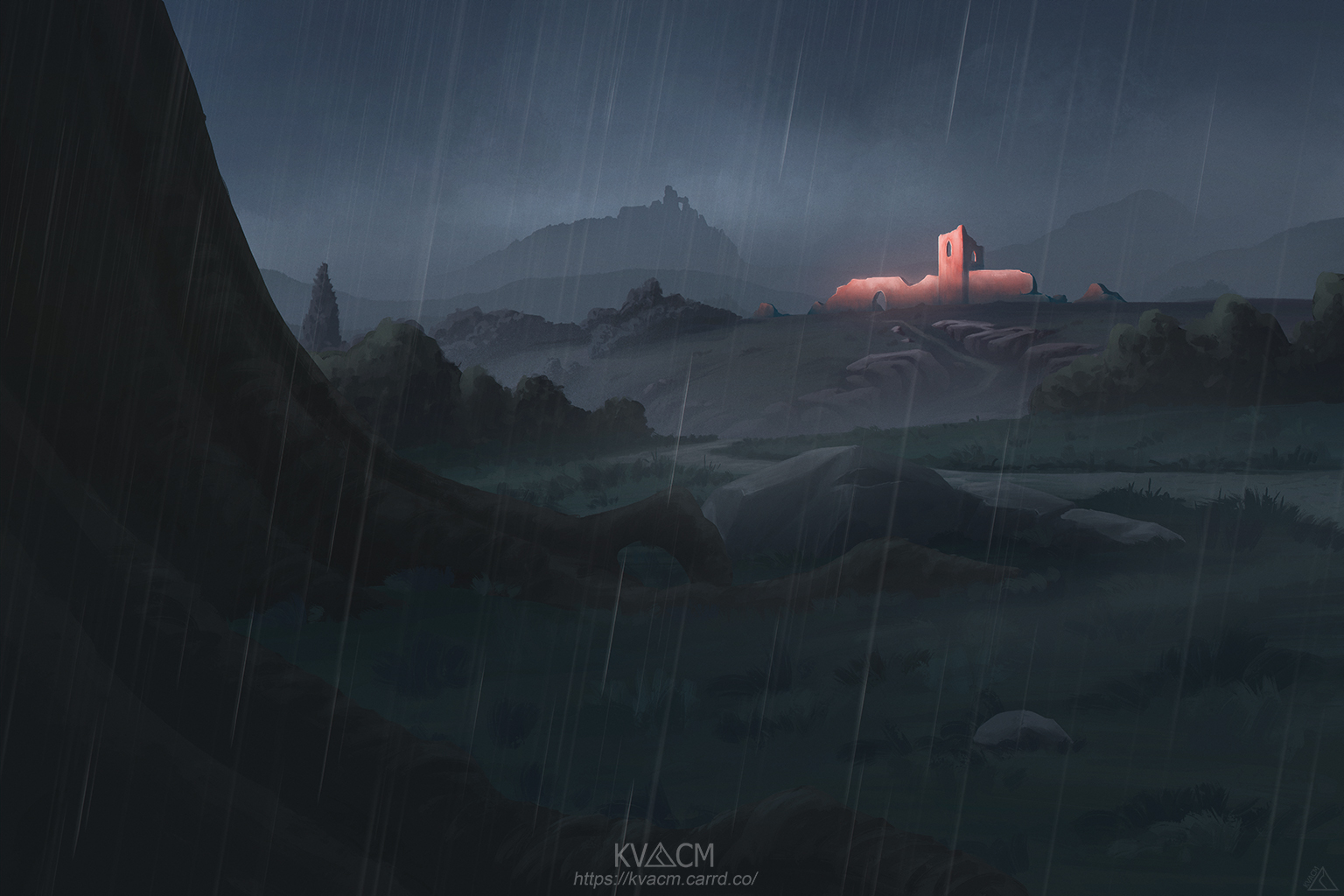
Anyway, the setting is called the Eastern Territories because it's the eastern edge of an ancient, sprawling empire that has, in recent years, slid from decadence to dissolution. It was called the Empire of Flowers, the Red Empire, the Magnificence, or just the lands of the Rotha dynasty.
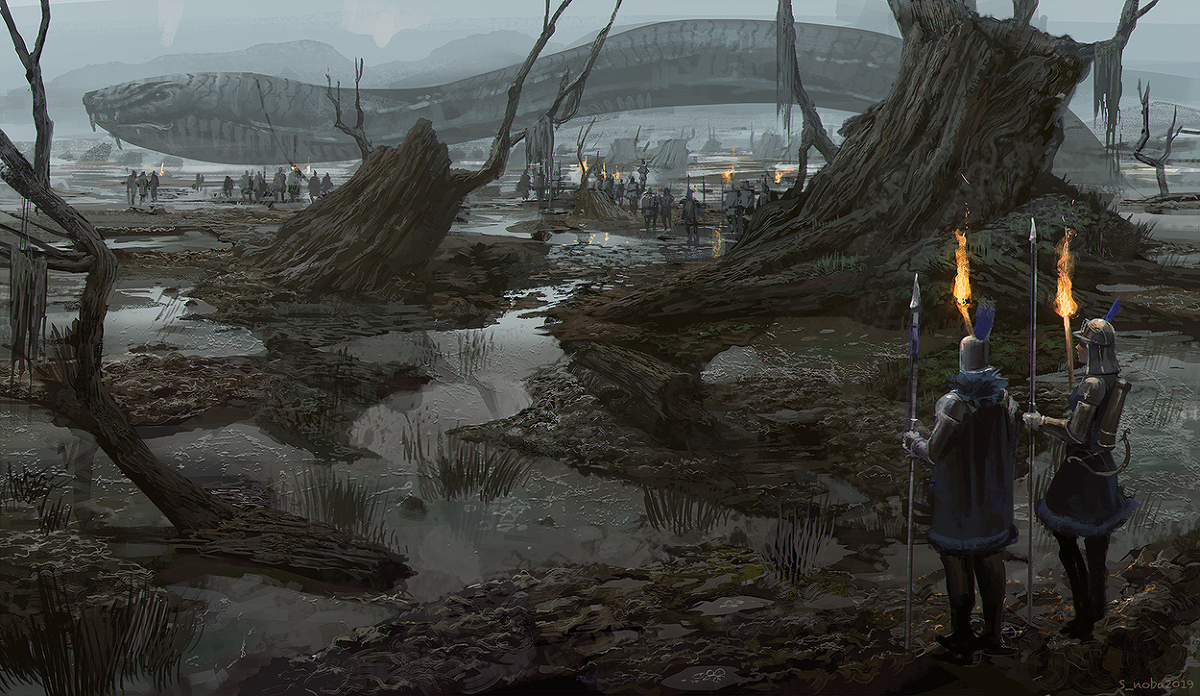
The Empire conquered the Eastern Territories over the past few generations, but never fully digested them. And now the Empire has fallen. Or is falling. Has been falling for at least a generation now. If there's anything left of it, it doesn't reach as far as the Eastern Territories anymore. Here in the interior of the continent, most folks haven't seen a legitimate imperial representative in a decade. They still exchange coins bearing the proud and brutal faces of the Rotha dynasty, but none of them have been minted lately. The roads and bridges and aqueducts are falling apart. The governors are selecting their own successors, or being replaced through palace coups or popular revolts. Tiny wars are breaking out everywhere. The cities are becoming isolated microstates, and the countryside is haunted by bandits and worse things.
To the west are the heartlands and capital, and the greatest density of the Empire's palaces, monuments, riches, and wonders. The people there still identify with the Empire, and maintain a semblance of the old system. The most recent emperor might be dead without a successor; maybe there's a succession crisis or a slow-motion coup going on. I think the imperial power structure is still in place in the capital, but isn't currently headed by a member of the Rotha family, and doesn't even control the whole city.
To the east, there's wartorn wilderness where the Empire struggled for years against a rival imperial power—and, to a lesser degree, the unconquered peoples who are native to the region. This conflict drained and destabilized both states, and devastated the region. It's blasted and polluted by magical and alchemical weapons, and plagued by continuing violence and social disruption.
To the north, there's a vast, seemingly endless desert populated by mostly nomadic folks. It was never really controlled by the Empire, but the Rotha family came from there centuries ago. A few specific sites in the north hold a lot of cultural and religious significance for imperial society, including a vast temple complex dedicated to the ancestor-saints of the Rothas.
To the south, there are mountains and cool, wet forests, and then and then a rocky coastline, a cold sea, and a lot of tiny green islands.
Magic
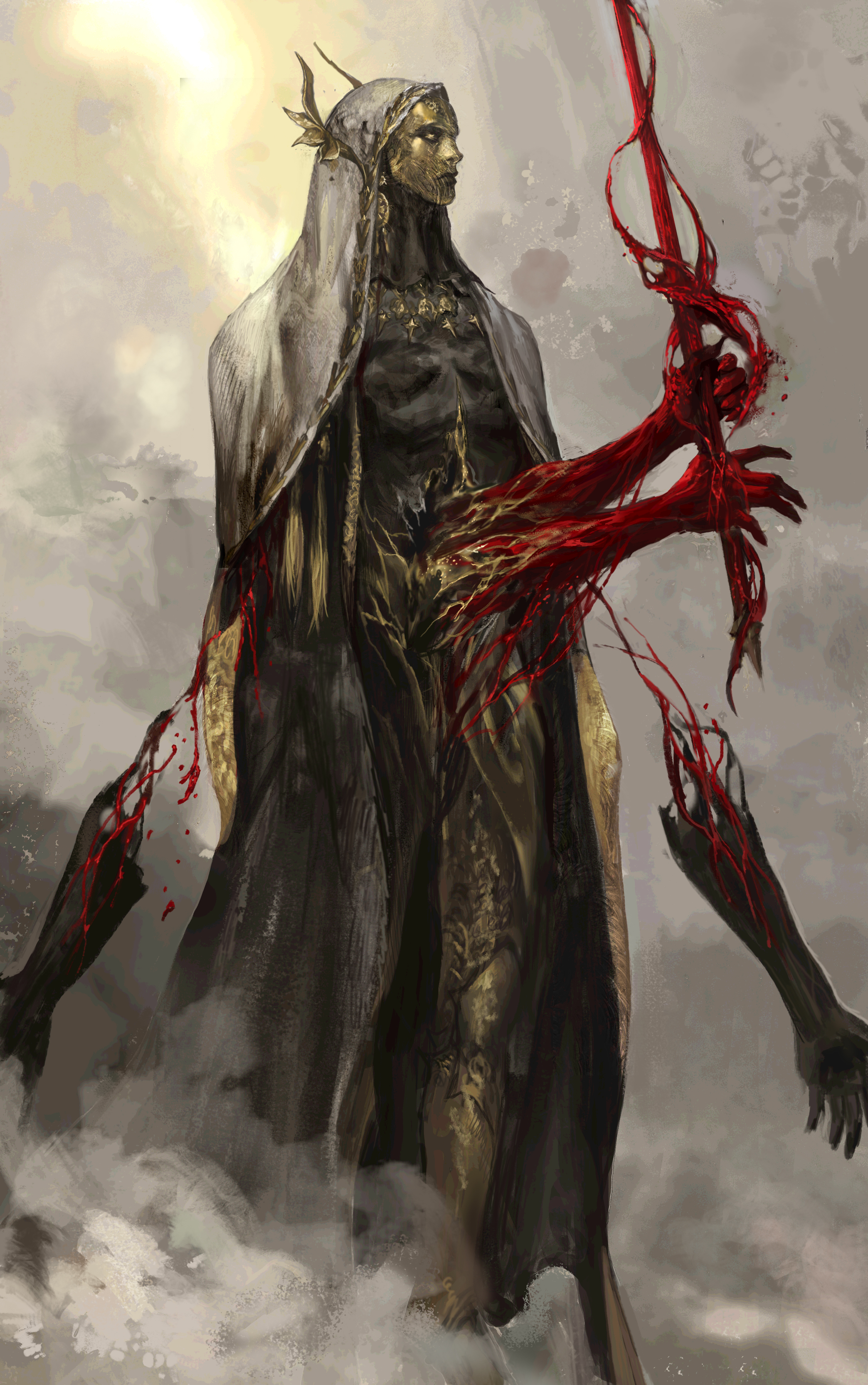
Magic of the secular, regular-folks-can-just-learn-it variety is a fairly common factor in human societies in and around the Territories. There are both whole schools of wizards, as well as less brick-and-mortar traditions of master-apprentice education. There's a lot of rivalry between wizard orders, and each has its own distinct paradigm of magical theory and system of spell notation (so it's hard for a wizard to use or even understand the magics of a different school). They're also powerful, often secretive factions within the region with goals and conflicts.
The extensive use of magic contaminates the world, releasing subtle energies and intangible exotic matter into the world. These flow and settle in unpredictable ways, collecting in places without metaphysical drainage or active ritual cleansing. These invisible stains cause madness, mutation, and malfunction. Severe magical pollution can trigger abiogenesis, sparking quasi-life in dull matter, giving rise to strange and unpredictable inorganisms. At its worst, it can wear away at reality itself, allowing forces and entities from other worlds to seep into this one.
Alchemy
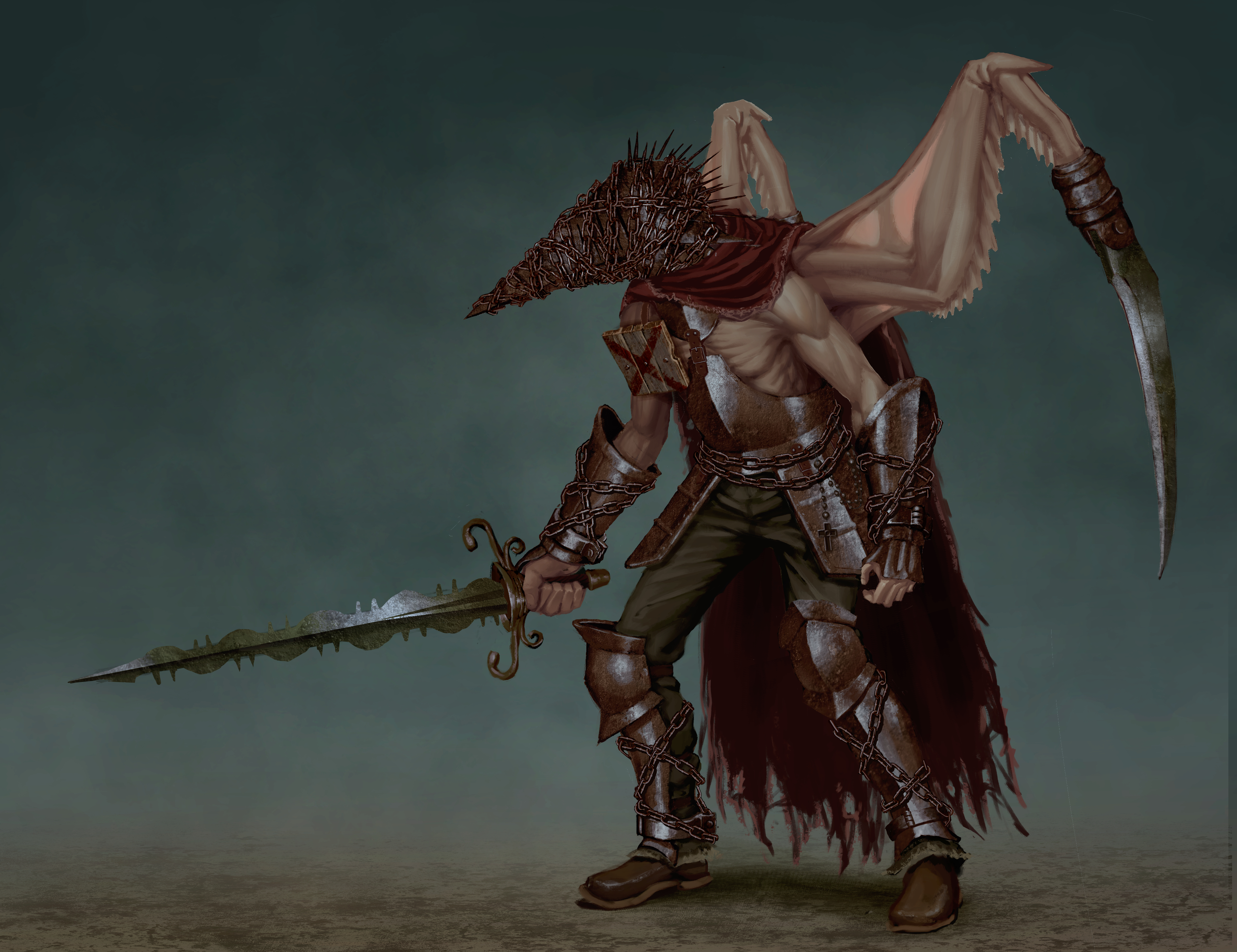
Alchemy is the more physical cousin of spellcraft, a kind of enhanced chemistry made possible through the magical alteration of ordinary matter, and the use of extraordinary matter extracted from a fantastic natural world. Alchemists typically have some magical training, but not enough to be called wizards. Most potions and many other "magic" items are produced through alchemy, rather than enchantment. Alchemical metallurgy produces incredibly sharp swords and durable armor. Explosives and firearms might also be a possibility. Alchemical medicines, poisons, and drugs are common.
Alchemy can change, enhance, or horribly maim humans and other living things. Among the world's deadliest mortal warriors are orders of knights who were transformed by extensive alchemical and surgical treatments, and bear weapons and armor too heavy for normal humans.
Internal alchemy
The same transmutational magics that unlock alchemical properties in common materials can also be turned inward, resulting in esoteric orders of "internal alchemists" who climb a treacherous path towards immortality and superhuman faculties, forever risking a fall into horrifying degeneration, should they overstep or weaken or neglect their vital regimens of self-cultivation.
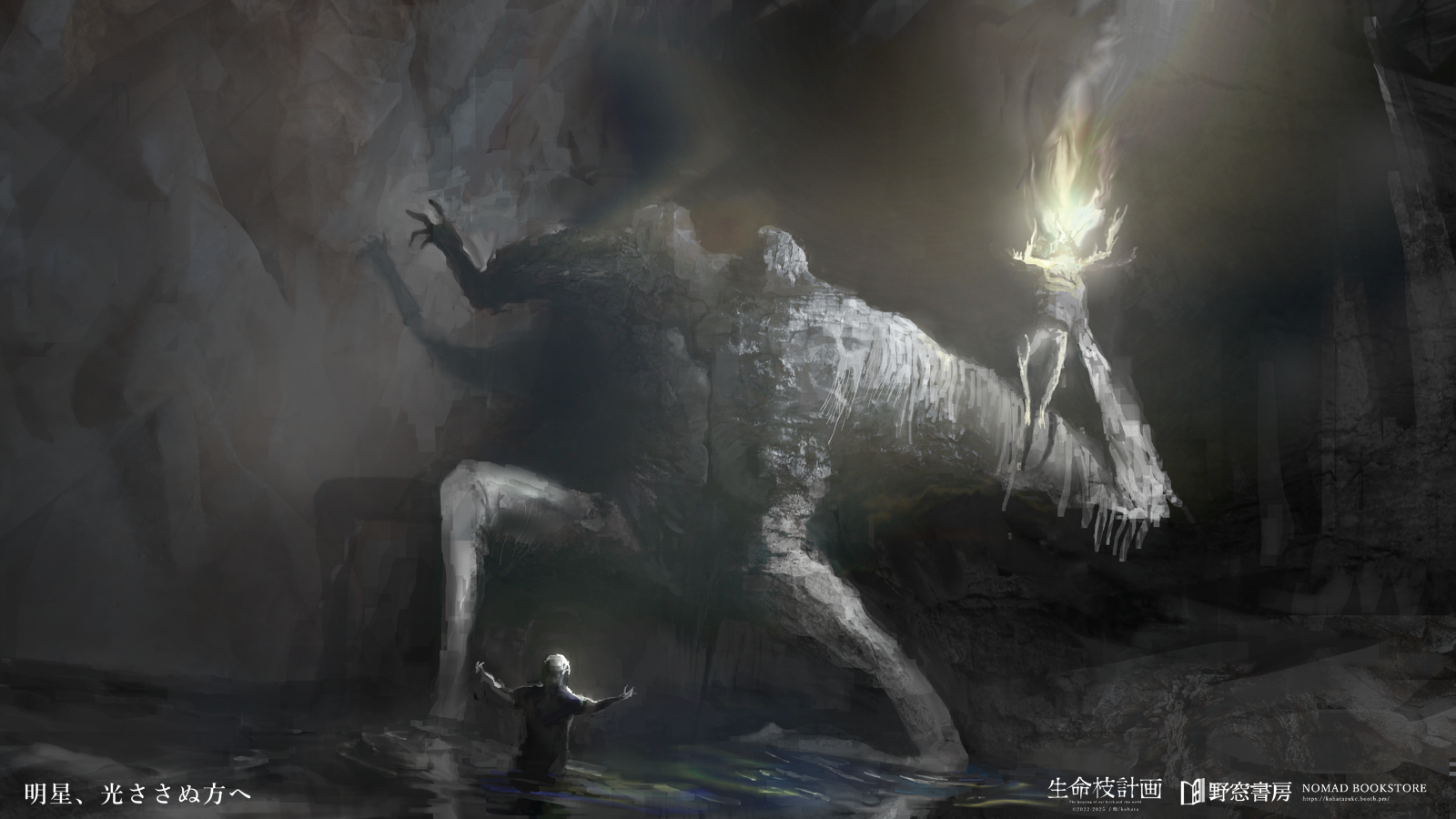
Lots of would-be immortals haven't got the alchemical skill or personal discipline to sustain themselves through internal transmutation, and instead resort to cannibalism. This normally requires some kind of potion to be effective at the start, but the change is self-maintaining as long as the user keeps eating human flesh. Such ghouls don't age as long as they're well fed, but become feral and monstrous when hungry. The change is inheritable, and becomes more pronounced in later generations, with descendants growing larger and more muscular than normal humans, sometimes degenerating into madness and overt inhumanity. Ghoul scions generally seem (and often believe themselves to be) entirely normal, as long as they have never tasted the flesh or blood of a human being. Many royal families carry this taint. In some places, a king is not a king if he's not ten feet tall and fed a course of expertly prepared manflesh every night.
The greatest art of alchemy is the creation of wholly new life: creatures called homunculi. These organisms can be sapient or bestial, beautiful or horrifying, decorative or martial or practical. They are not common, and no two are alike. Most are flawed in some way, sometimes terribly so.
Gods
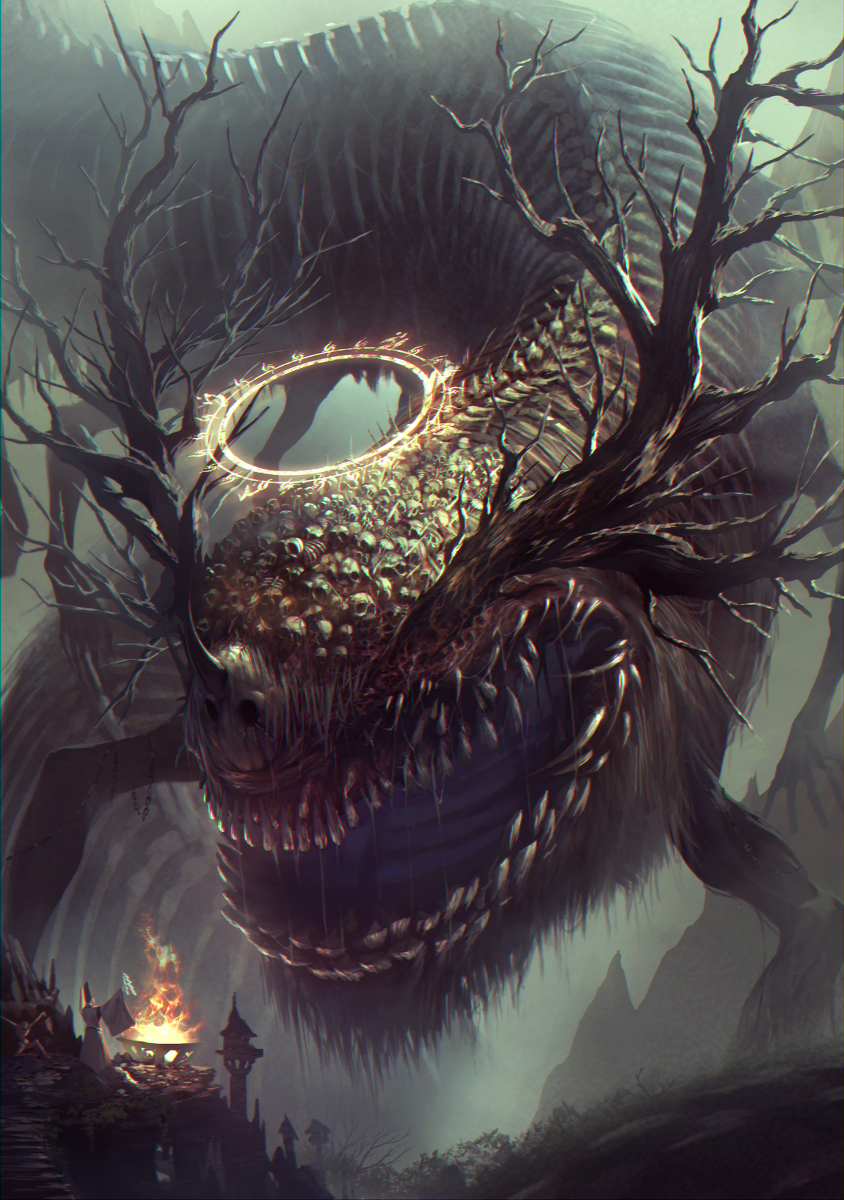
There are loads of religious groups in the world. They're mostly small and region-specific, because the divine beings who command them have a limited range of influence. These beings are typically gods, saints, immortals, idols, and outsiders (although all of these may be called "gods").
True gods are demons—inhuman spirits from the Sea of Stars—who have obtained a lasting foothold in the world through the worship of mortals.
Saints are ghosts who have obtained physical power in the world of the living by attracting the worship of mortals.
Immortals are human beings who have rendered themselves ageless and very difficult to kill through internal (and sometimes external) alchemy, and might supplement their power through worship.
Idols are inanimate objects granted consciousness and power by worship. People's relationships with these beings tend to be very transactional, and they will switch cults if a different one looks more beneficial, or even attempt to maintain multiple cult memberships at once.
Outsiders are wildly varied physical quasi-biological entities that occasionally fall from the sky or arise from the earth or ocean. Full-on Great Old One shit.
There's no real distinction between "arcane" and "divine" magic: Gods are just magical beings, and their power comes from mortals, whose worship feeds them from the same inherent mortal power that wizards use to cast spells. Demons, ghosts, and the souls of the living are all essentially the same kind of thing—composed of the same "substance", so to speak—but with different origins and features.
Lots of gods have prophets and other divinely empowered mortals in their service, but this isn't a role for player characters.
Death
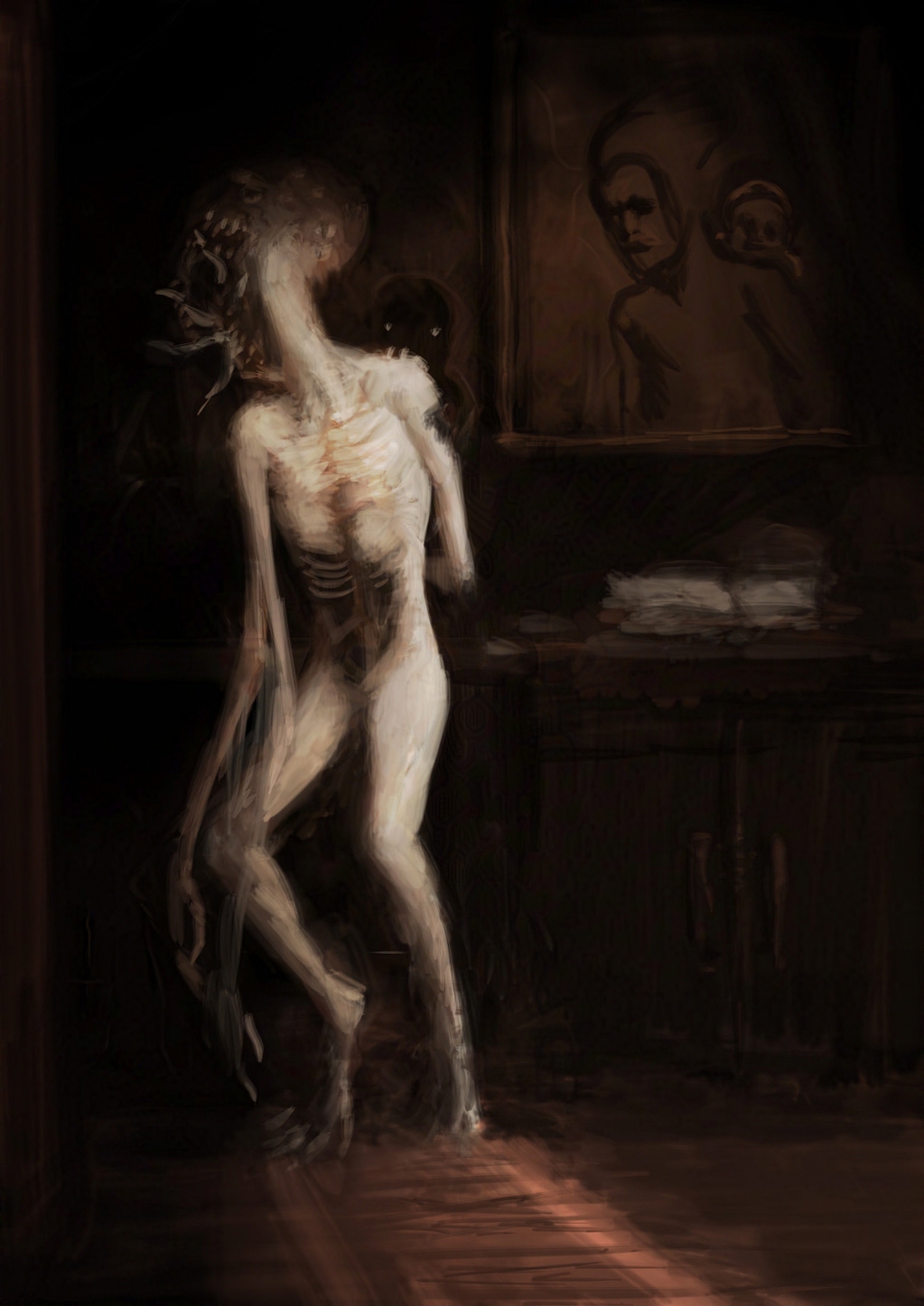
When people die, the natural outcome for their soul is to be reincarnated somewhere else in the mortal world, usually not too far from the site of their death, and usually in a new human body. Deities of sufficient power can break this cycle, and take a properly prepared, sufficiently willing soul into an immaterial afterlife realm within the Sea of Stars—the continuum of spirits and dreams. The activities of deities (and some wizards) have worn away at the mechanisms of death, so that the pull of reincarnation and the gates of death aren't as strong as they used to be. A determined soul can now avoid being pulled into a new life or an afterlife, and persist in the world as a ghost. With enough power or finesse or trickery, a dead soul can slip into and out of afterlives and dream worlds and the world of the living.
Ghosts are unstable things, prone to losing their memories, personalities, and identities over time. They eat other ghosts, stealing some strength while losing their individuality, or merge with each other as nameless gestalts. Powerful ghosts can even manifest ectoplasmic bodies for themselves, but they're forever in danger of eroding into undifferentiated soulstuff: Their false flesh "rots" away, starting at the extremities (including the head), so they often supplement their ectoplasm with physical objects. A ghost can only persist indefinitely if it gains the support of living mortal souls (potentially making it a saint), finds a place in an afterlife (which is itself supported by living souls), or takes refuge in a physical body through possession (which may or may not be consensual).
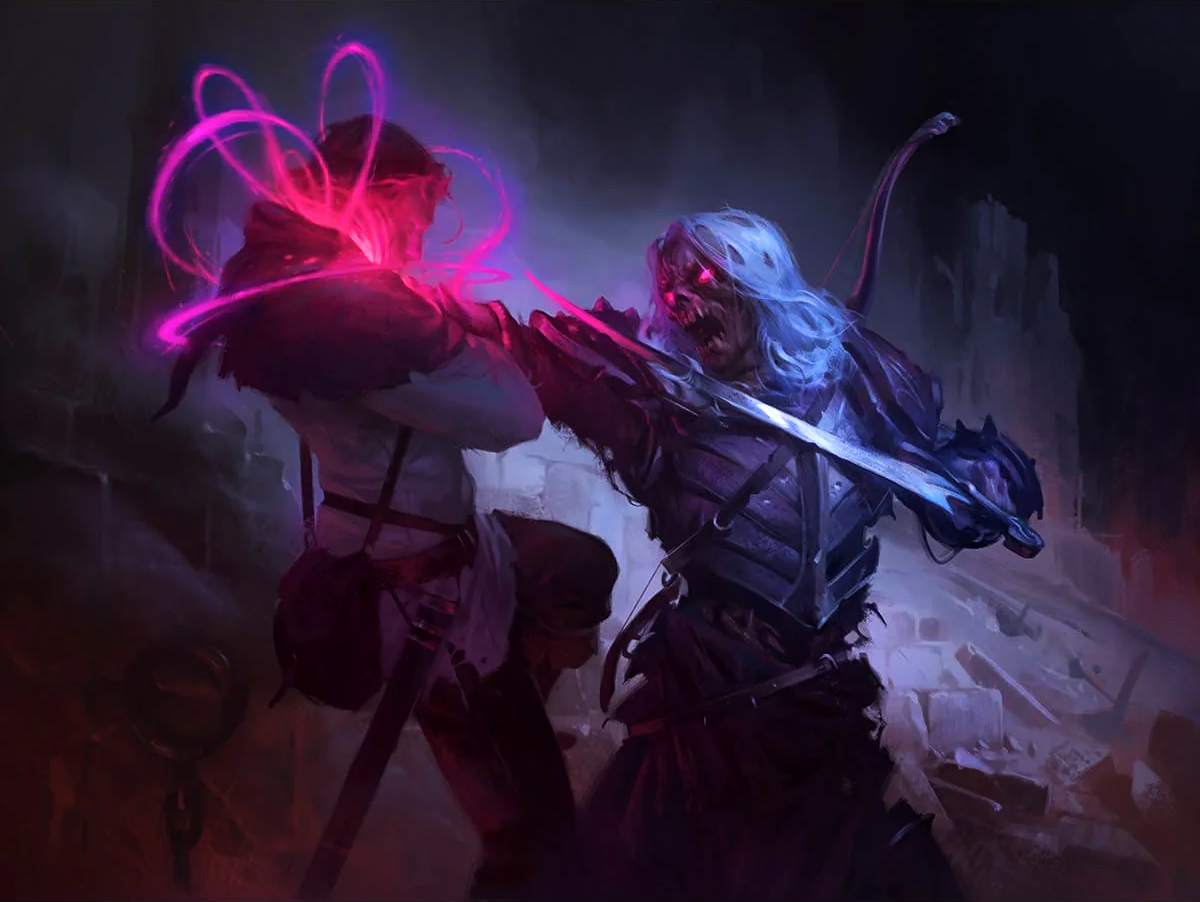
When death severs a soul from its body, some amount of spiritual power is normally left behind in the physical remains. If the individual lived a long life, had a strong will, and didn't frequently feed their spirit to a divinity, this could be a significant amount of power. A strong ghost, a cluster of weak ghosts, a lesser demon, or some other spirit can reanimate and possibly reshape a reasonably intact corpse by drawing on this store of energy. Consequently, people bring corpses to wizards or temples to have them drained of their lingering power and sealed against intrusion. Untended corpses will very frequently become inhabited by some unwholesome entity, especially if they're left outside of the radius of any cult's influence, or in a place that's especially crowded with spirits or rich in magical energy. The resulting undead things are normally weak, stupid, slow, and ravenous, but they gain power, intelligence, and self control by consuming the flesh and spirits of the living. Very old, well-fed undead can be incredibly powerful and even lifelike.
People
Humans are virtually the only sapient mortals around, but I'm reserving the right to throw in other kinds of people. The plan, though, is that any such beings won't be valid player characters by virtue of their inherent power or psychological constraints—they'd be technically people, but not really human-equivalent ones.
I want to be able to have my non-standard world and still adapt other people's dungeons and adventure modules, so I've got a vague idea that I'll adapt non-human people in those materials into human groups or into fucked-up monster people on a case-by-case basis, depending on the role they play in the material.
History
I intend to keep this setting's history pretty vague for the sake of simplicity and utility, but I do have a few loose ideas.
The Empire of Night
Most people's understanding of history starts with an era now referred to as the Reign of the Nameless Kings, or sometimes the Empire of Night (by those who use the poetic "Four Empires" frame of history). It was a vast (possibly world-spanning?), tremendously powerful, and monstrously evil civilization that is ultimately responsible for a lot of the dungeon complexes and lurking ancient horrors that still exist in the world. Their magic was fundamentally different from that which is understood today, and included lots of necromancy, flesh sculpting, and soul manipulation.
None of the civilization's writing is translatable today, and no proper names survive from the time (thus the "Nameless Kings" expression). It's largely understood only through comparative folklore study and some extremely dangerous archaeology in their sunken ruins: They left behind mile after spiralling, serrated mile of black stone and strange metals, stuffed with millennia of wonders and warcrimes. The Nameless Kings—whoever they were—stacked up so much power throughout ages of unrestrained atrocity that it still hasn't run out, and their cities are still alive with wicked energy.
The Empire of the Moon
After the Empire of Night came the Pure Age, or the Empire of the Moon. It's unknown how the Nameless Kings fell, and the varied theories are defining beliefs for a lot of modern political, philosophical, and religious divisions: Popular theories include natural cataclysms, heroic revolution, a fundamental change to how magic functioned, and the intervention (possibly even the invention) of gods or saints.
At any rate, the age that followed was even more mysterious, because while it gave rise to many surviving oral traditions, it left behind few physical artifacts. The peoples of the Pure Age are believed to have led a primitive existence with no magic, simple tools, and a largely nomadic lifestyle. It's looked back on as an era of noble savagery and mythic heroes.
The Empire of the Sun
From the Pure Age rose the Age of Glory, the Dawn Empires, or the Empire of the Sun. (The plural "empires" is more factually correct, with the singular being used only in Four Empires terminology.) This was when magic was reinvented (or rediscovered), and it's a subject of debate whether magic made the empires possible or the empires made magic possible.
This was an age of growing power, bloody conquest, emerging cultures, and great art, very roughly comparable to our Bronze Age. Many writing systems of the Dawn Empires are understood by modern scholars, so this era's history is somewhat understood. It's looked back on as a loss of innocence, but also the glorious foundation of the modern world. All modern science and magic (no distinction is made between these) springs from the great minds of the Dawn Empires, and a lot of royal and cultural legitimacy has its roots there as well.
The Empire of Flowers
The most recent age (which might actually be at an end now, but no one's declared a new one yet) is called the Magnificence, or the Empire of Flowers, sometimes the Red Empire. Its beginning blends into the age of the Dawn Empires, but is typically defined by a boom in alchemy, the industrialization of magic, and the conquest by the Rotha dynasty and its allies of most of the continent.
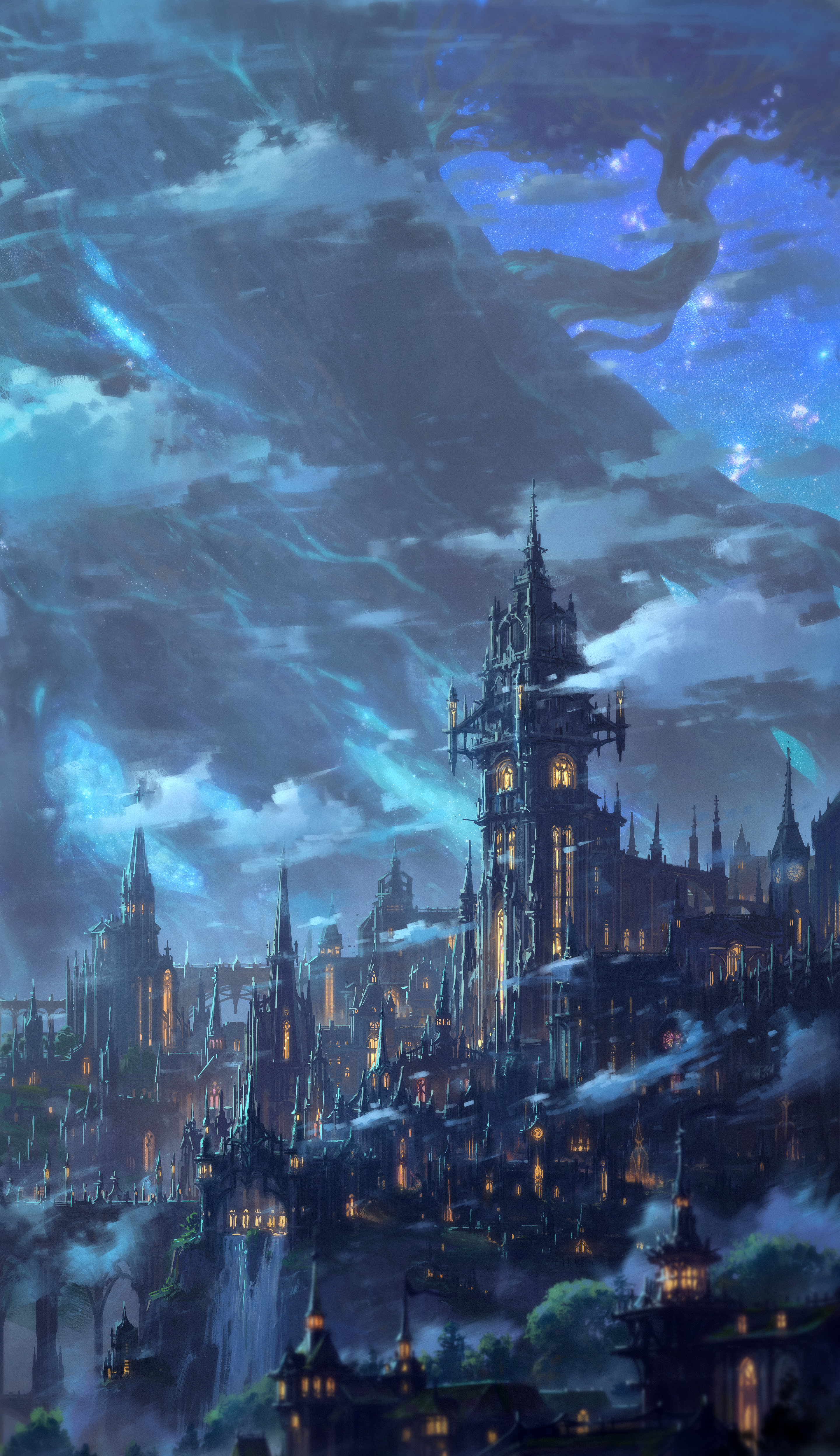
This empire, while essentially fallen, largely defines the material culture of the primary campaign region. It was extravagant, with a love of excess, ornamentation, colossal statues, personal finery, spectacular displays, and a style of art and architecture that was somewhere between baroque, art nouveau, and gothic. Gold leaf, shining brass, lurid colors, alchemical luminescence, horror vacui, grotesque exaggeration, live animals as ornamentation, live humans as ornamentation, masks, face and body paint, hair coloring, cosmetic alchemical alteration, incense and perfume, artificial fogs, pools and fountains of things other than water, private manageries, mock villages, vast rooms, huge orchestras. More was always more.
The riches that fueled all of this extravagance, of course, were looted from countries the Empire gobbled up over the centuries, as well as several unlucky neighboring civilizations.
In closing
Anyway, this kind of isn't really a setting. It's more like a frame through which to process whatever adventures I might repurpose for this project. The setting would be whatever comes out on the other end of that. Will I ever actually reach such a point? Who knows!