

Energy drain mechanics
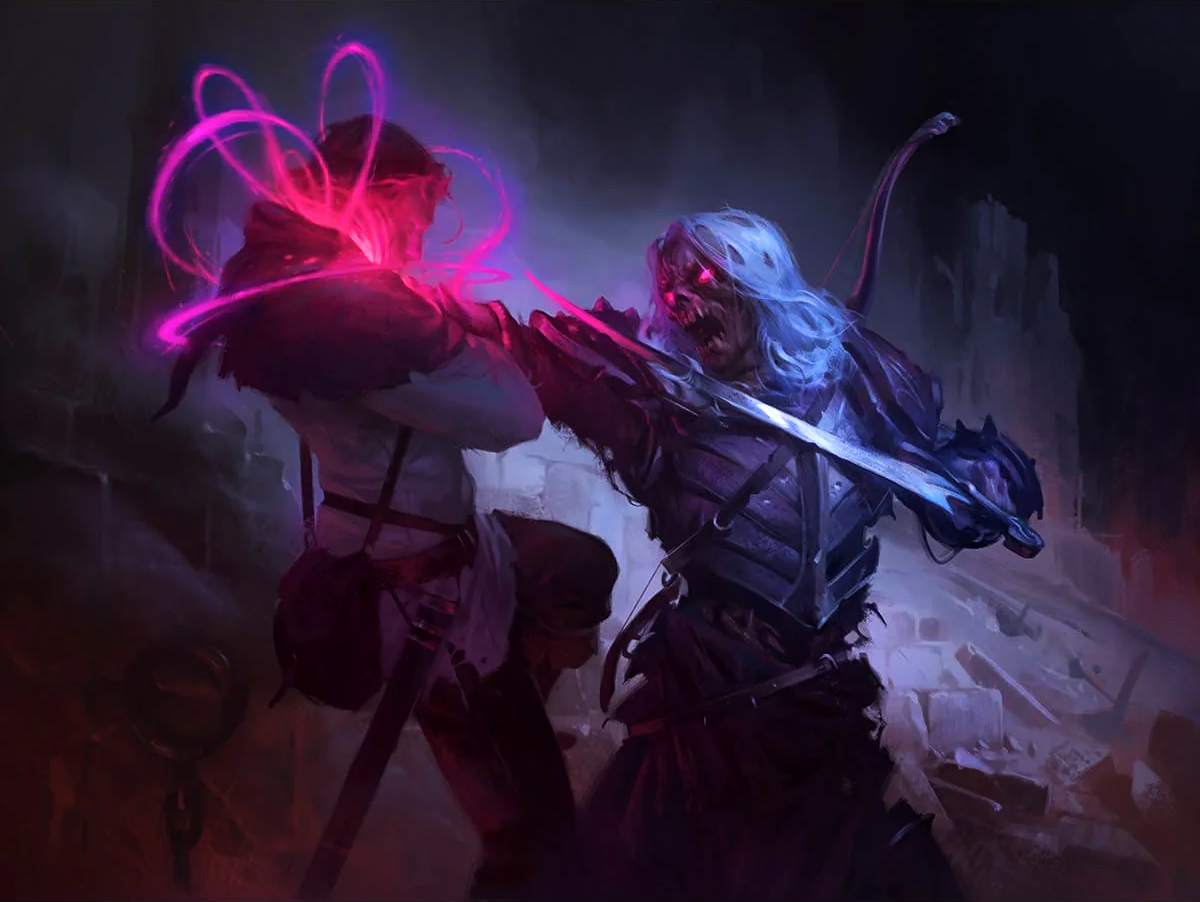
I've been thinking about building a generic corporeal undead generator that sort of blurs together the skeleton-zombie-ghoul-wight-mummy-vampire hierarchy into a single spectrum of randomly variable creatures. Working towards that purpose, I found myself attempting a grand unified theory of undeath. The most interesting thing that's come out of that process so far is a pile of notes on different ways to handle the energy draining properties of various undead monsters. I pulled these from various games, blog posts, forum discussions, etc., plus a little original material.
Vector
The first consideration is how the energy drain is delivered. Naturally, more brutal effects can be balanced by more avoidable vectors.
Touch. The creature has a dedicated melee attack that applies its energy drain effect, but doesn't inflict any damage on its own. The energy drain itself may or may not subtract Hit Points, but it doesn't come alongside, say, slashing damage from a claw attack plus a bonus from Strength.
Unarmed attack. The creature's unarmed attacks (claw, bite, slam, whatever) also inflict an energy drain in addition to normal damage. A creature with this property might also have the power to use its energy drain against those who touch it.
Any melee attack. The creature can use its energy drain through a weapon attack. Maybe it carries a sword that crackles with dark energy, but turns out to be a totally mundane object.
Special attack on grappled target. The creature can only use its energy drain through a bite/kiss/inhalation/etc. move that requires a grab as a setup. This might happen in the same round (in an "If both claw attacks hit, it also makes a bite attack" sense), or the energy drain might only happen if the grapple is maintained for a round (giving PCs a chance to interrupt it).
Ranged attack. Single-target or area effect. Maybe it lobs a bolt of black light, maybe it opens its mouth and just sucks the souls out of those around it, etc. Obviously, this could be horribly brutal unless the energy drain effect itself is fairly minor.
Aura. The drain effect works as a passive area effect centered on the creature. Sounds awful, but it could work in a "puzzle monster" situation if you signpost it enough.
Effect

Folks have wept bitter tears over the old, unforgiving energy drain mechanics. Generations of DMs and variants of D&D have come up with lots of other options. I'm listing a bunch of them here, and including a few more of my own. Some of these effects are pretty minor, and are intended to be bundled along with others.
Level drain. The classic, feared energy drain. I think all TSR-era D&D editions use this mechanic, more or less. To be fair, it's undeniably less harsh than death in a campaign where new PCs start off at 1st level, and death can come very suddenly in oldschool games. Also, level drain isn't such a hassle to implement in a system with simple character advancement. That said, it still feels very harsh: Levels are ultimately the most fundamental track of character advancement. I get why folks have come up with so many alternatives to this mechanic.
Negative levels. This is the 3e variant. For each negative level you take, you reduce your current and maximum HP by 5, suffer a -1 penalty to d20 rolls, and lose both a spell slot and a prepared spell (if you've got any).
Life drain. The 4e/5e mechanic is basically one third of the negative level from 3e: The victim takes damage and reduces their maximum HP by the same amount.
Bane. This mechanic would be a different third of the negative level: a straight-up penalty to attacks, ability/skill checks, and saving throws.
Magic drain. The final third of the negative level: This would just take away spell slots and/or prepared spells. Alternatively—since lots of PCs have magical abilities that don't use spell slots—it could prevent the use of magic in general. Naturally, you'd probably want to pair this effect with something more universally applicable.
XP drain. This would be the opposite of the negative level method: Instead of losing (the benefits of) a level without losing XP, you lose XP without losing a level. I expect this would feel harsh even without doing real harm.
Ability drain. This is a very popular alternative to level drain. Constitution and sometimes Strength are the usual targets, but I'd say there's a case to be made for hitting Charisma in games where it represents willpower, magical power, the favor of the gods, etc.
Exhaustion. The 5e exhaustion mechanic is remarkably harsh: It reduces both d20 rolls and movement speed, and 6 levels of exhaustion will just kill you. Removing just 1 level of exhaustion requires a long rest or a 5th-level spell!
Encumbrance. In systems with a log of focus on inventory management, energy drain could encumber victims with phantom weight.
Wasting sickness. The victim can no longer regain hit points. Additionally, they might take a small amount of damage every day, putting their life on a countdown and forcing them to seek a remedy.
Death flag. In a system where death saves or similar mechanics prevent a PC from immediately dying upon reaching 0 or negative HP, this effect removes that chance to survive.
Life force drain. Every successful energy drain attack decreases a character's life force—a stat that normally equals character level—by 1. If that hits negative numbers, they die. Gaining levels increases life force. Maybe other things can increase it, too, like making friends, or stealing life force from other people.
Undeath. A common trait of energy drain effects is that they cause those killed by them to rise again as undead creatures. But we could also extend the effects past that one encounter: Those marked by the curse of undeath might become undead (and immediately threaten their allies' lives) when they die of any cause.
Healing. As a secondary effect, the draining creature gains some HP. This could be a flat amount, or based on how much HP their target lost. It also might grant the creature HP above its normal maximum.
Paralysis. Is the ghoul's paralytic touch a kind of energy drain? It's not typically thought of as such, and the mechanics are completely different, but I feel like it fits in the same category! I'm reasonably sure Gygax or somebody even described the effect as literally involving a draining of life energy. Anyway, I'm throwing it in here for the sake of completionism.
Duration
The final dial that defines an energy drain mechanic is how long it lasts or what you've gotta do to fix it.
Permanent. You can gain a new level, sure, but the one you lost is gone forever.
Until the victim gains a level. This one is kind of brilliant, because the affliction lasts long enough to be scary, and it makes leveling up even better.
24 hours / until the victim completes a long rest. Each day might only restore a single degree of affliction (1 level, 1 point of penalty, etc.). Recovery might happen automatically, or you might need to make one or more saving throws. (In 3e, recovering from negative levels requires a saving throw. If you fail, they turn into real and permanent lost levels.)
Until the inflicting creature is destroyed. This isn't very exciting if the creature is killed two rounds after it uses its energy drain, but could be cool if the party flees, regroups, and returns to take back their stolen life energy. It could also work nicely with a monster that doesn't stay dead unless some kind of special conditions are met. Also, I love the idea that an afflicted character would be sort of connected> to the thing that drained them: Maybe they're vulnerable to manipulation by the monster, but they gain the ability to sense its presence or general direction.
Until cured by magic. Of course, depending on what kind of magic is required, this could be damn near permanent or cured before the fight is over, largely dependent upon party level.
How would I do it, though?
I think, for a quasi-classic energy drain, I'd probably pair the 3e negative level with the "until you gain a level" duration. And I really like the grapple-then-drain vector. I might throw in the "death flag" and "undeath" effects to make it a bit nastier. But, really, I could imagine using most of these elements in one place or another.
