The Hawk's Moor Adventuring Collective
From 2020 through 2022, I ran an online West-Marches-esque D&D 5e game with a slightly oldschool bent. It ran for 91 sessions before my time got eaten up by . . . actually, I'm not sure. I was probably just really busy with Iron Circus stuff. Anyway, having recently read Idle Cartulary's Reflections on a West Marches Campaign, I feel like doing a quick retrospective.
Initial plan
As I've mentioned before, I'm into (what we now call) oldschool styles of D&D gameplay, but I generally prefer modern systems. And the whole West Marches thing seemed like a really interesting campaign structure. I loved the idea of an amorphous cast of PCs of varying levels.
I didn't want to get into the whole ad hoc schedule thing, though. So that's a pretty major deviation from the canonical West Marches format that I made right from the beginning.
I love tinkering with rules, but I hadn't run D&D since the 5e playtest days (Remember "D&D Next"?), so I restrained myself and stuck to what I called "vanilla+" rules. I ditched alignment, implemented the full encumbrance rules, and allowed players to bring in all kinds of third-party PC options. I think the most houseruley I got at the start was having NPCs make Charisma saves as morale checks. (I will die on the hill of using Charisma to represent courage, not Wisdom.)
I started with a really loose idea of the setting—I called it "maximalist kitchen sink fantasy in a vaguely-defined world". I had the players contribute setting elements during session 0, and gave them free rein to define the world by defining their character. You know, like "You're playing the first dwarf that's shown up in this game so far, so you get to tell me what dwarves are like in this world."
In order to skip over all the "You meet in a tavern…" stuff, I came up with "the Hawk's Moor Adventuring Collective". This was to be a non-hierarchical guild of adventurers which gave the PCs a reason to work together, a base of operations, and a way to share their maps and pooled resources. It was, of course, named after Greyhawk and Blackmoor. I didn't throw in any NPCs to run the group; that was all up to the players.
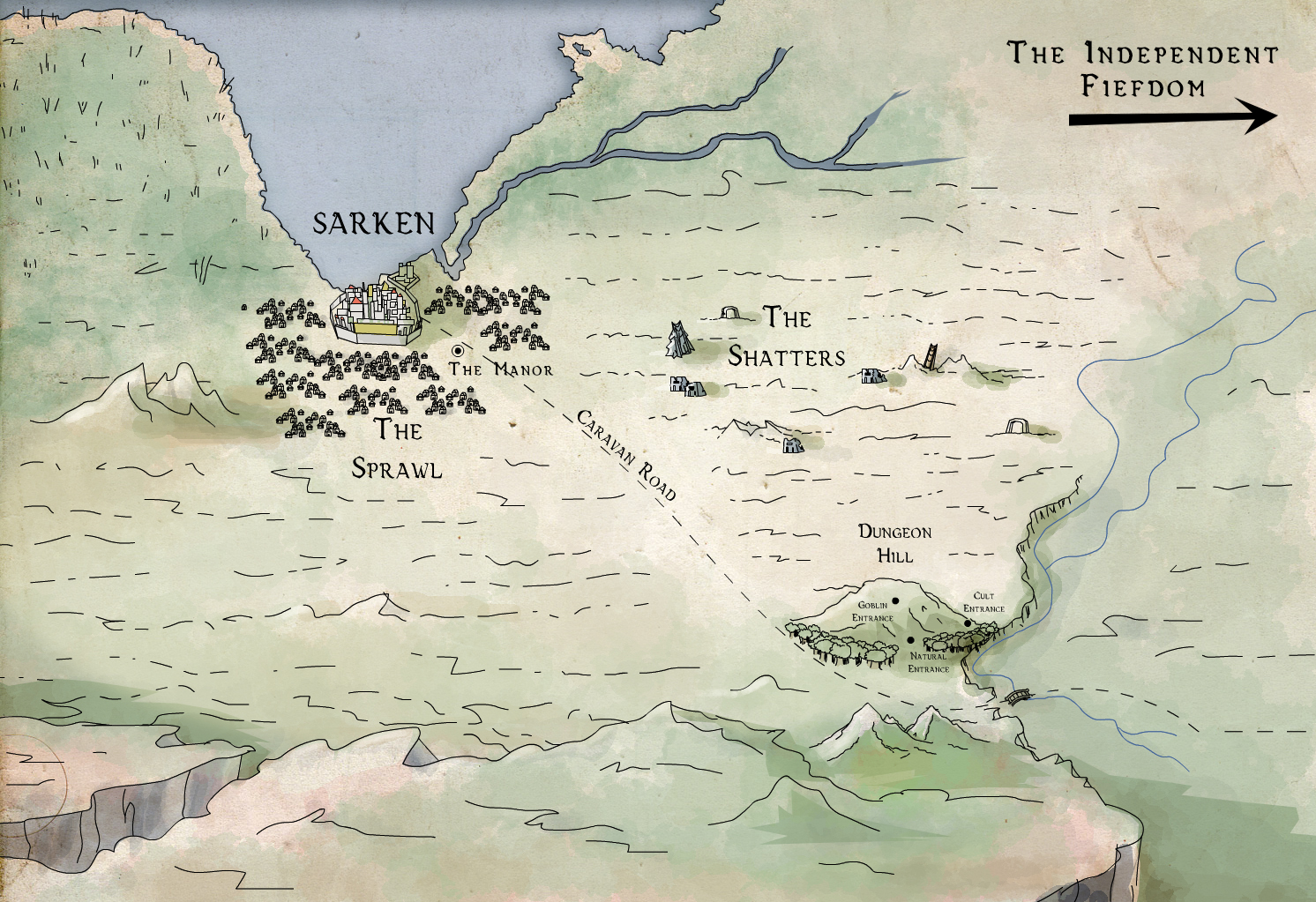
I put the HMAC's clubhouse in a giant, Lankhmar/Ankh-Morpork-style city-state called Sarken. All I knew about it was that it was huge, ancient, and diverse, containing every playable species available for the game, and basically any urban feature we might require.
For our starting dungeon, I picked Dyson's Delve, a "mini megadungeon" by the excellent Dyson Logos. I had a huge amount of fun reinterpreting the contents, coming up with 5e replacements for B/X elements, and reflavoring stuff to fit the kind of world I wanted. I never gave the players a name for it, so they ended up calling it "Dungeon Hill".
I put together some slightly elaborate character generation instructions, and tried to make them new-player-friendly. They look kind of daunting, but they actually seemed to work out okay! I also went kinda nuts trying to make it possible for folks to randomly roll up their characters while keeping ability scores fair and equal, but I kinda think nobody ever used the random option.
Finally, to kick this whole thing off, I wrote up a pitch document and put the word out. I don't think I actually posted anything publicly, but my gaming friends were all free to invite more folks at their own discretion.
Tools
We played via Discord with the DiceParser bot and Google Sheets for character sheets. We normally didn't use any kind of virtual tabletop, except when we resorted to some kind of free whiteboard platform for one or two big fights. I really wanted to avoid getting locked into anything that would handle rules stuff for us—even something as basic as automating attack rolls—because I hate the thought of having to stick to the rules as written (or, worse, a VTT dev's attempt to implement their interpretation of the RAW).
Some of my players would have preferred more automation, but I believe my hack-job solutions turned out to be not only more flexible than real purpose-built tools, but also more reliable.
I probably went overboard on creating lots of separate Discord channels. I feel like that is a common (if trivial) mistake.
We used some pretty extensive spreadsheet tools for this campaign. Each PC had a character sheet based on this one built by Tintagel, editable by the relevant player and myself. These included easy and precise encumbrance tracking, and one of the players—a professional spreadsheet genius—built a system of formulas that auto-generated each PC's attack rolls, skill checks, etc. as DiceParser commands. The character sheets got their XP totals from a separate sheet where I did all my post-session experience accounting.
I also had a "dashboard" spreadsheet that tied into all of the character sheets. I could tell it which PCs were present just by clicking some checkboxes, and then use it to roll stuff like Perception checks and luck rolls for the whole party at once. It also included an initiative tracker where I could paste in monster stats from a different spreadsheet, and it would then roll initiative and hit points for those monsters, roll initiative for the PCs as well, and automatically arrange everybody in initiative order, displaying their ACs, current hit points, etc.
The aforementioned monster spreadsheet contained stats for all the monsters that I expected to need, each one as a separate worksheet. Each monster had auto-generated DiceParser commands that I could just paste into Discord to roll their attacks. For a few monsters, I built random appearance generators right into their sheets.
Perhaps most crucially, I made a huge calendar document that tracked what happened during our sessions and when that actually was in terms of in-setting time. This spreadsheet also included the weather, the phases of the moon, the dates when various downtime actions would be completed, ongoing NPCs activities, etc. I actually had both a DM-only and player-facing version of this document. It was kind of a chore to type up all these session notes, but it really helped me remember what was going on from week to week. Like, without even referencing the spreadsheet, the act of typing that stuff fixed the facts in my memory.
Anyway, all of these tools made for a whole lot of browser-tab-juggling during the game, and I frequently wished I had more than two monitors. But, overall, it worked well, and I would definitely use this system (or something derived from it) again.
Setting
So, like I said, the setting started out pretty vague and flexible. I prefer weirder settings than the familiar spectrum of dungeon fantasy mishmashes that we see in both old and new D&D, but I wanted to be really inviting and allow an extremely wide range of character concepts and mechanical options.
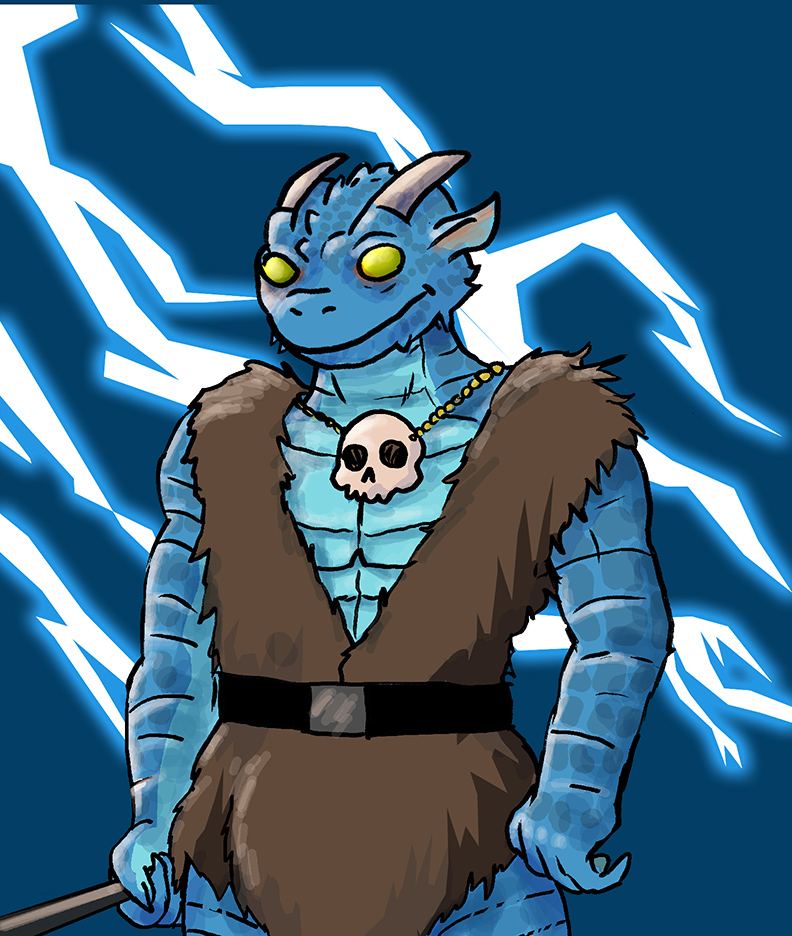
We had a session 0 where some of my earliest players got the chance to set down a lot of basic elements. At this point, I couldn't even say what ideas came from who, but somehow we ended up with two moons, one of which was an immense skull. Elves were a transhuman variant created by a merciless ancient empire called the Hierarchy. Goblins, hobgoblins, and bugbears were a single species, and a lot of them were obsessed with a mutagenic substance called "black milk".
The players also had the freedom to come up with the details of their characters' species and stuff, and wow did they ever run with that. One player described their lizardfolk character as a crocodile person, so crocodilans replaced all the lizardmen on my dungeon map. Another player reinvented wood elves completely, and wrote up a whole document about what their deal was. (This was actually a player who was pretty new to TTRPGs, so I was really impressed and excited by how much they understood and embraced that creative opportunity.)
Sarken gradually accumulated more details, and I eventually put together a brief almanac about it. (Much thanks to Watabou's city generator, by the way!)
Later in the campaign, I bought a published megadungeon to supplement our starting dungeon, added its surrounding environs to the world, and gave the party some hexes to journey through (and other towns and adventures to encounter along the way), linking this area with Sarken's region.
Through all this, I accrued loads of setting notes about characters, places, factions, subplots, etc. Some of those ideas came up again later, others kinda got forgotten, but mostly they became part of the overall color of the setting.
Players
I'm extremely lucky in this regard. I've been very online for a long time, and I've got lots of friends in the general comics/webcomics/comics-adjacent scene. Naturally, a lot of these folks are TTRPG people. I both ran and played in some games online before, so I started the HMAC campaign with lots of potential players, and they're all great folks. They're fun and creative, and brought the right kind of energy to the game, as well as a good mix of skills and perspectives. They're all competent with the game system and fully engaged with roleplay. There are some artists in the group, too, which is of course always great!
Anyway, over the course of the campaign, I believe we had 14 different players, although maybe five or more of those folks only played for a session or two. Things definitely got way less open-tabley over time, with the players settling down to a core group. Attendance was still very flexible, though. For the vast majority of sessions, we had four to six players, with one instance where nine folks showed up! We also had a few sessions with only two players, and I actually remember those as being pretty cool. Things moved fast, and those two managed to get a lot done.
After the HMAC campaign, the core group stuck together, and we're still playing D&D on the same Discord server. I love these folks.
Characters
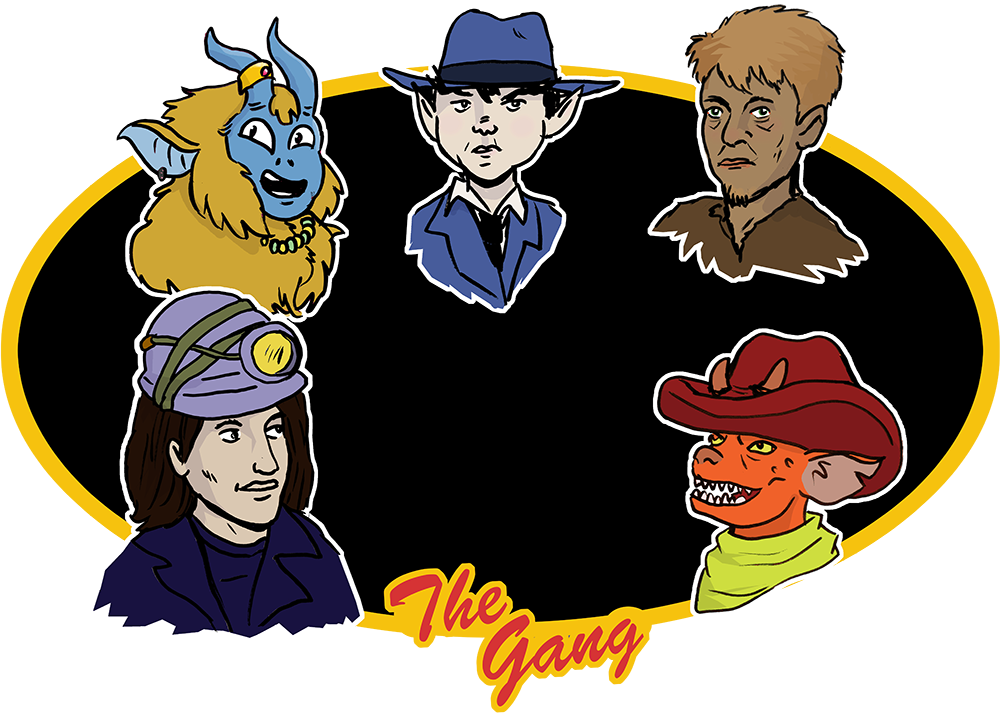
Wow, we sure had some! One really important rule in this campaign was that anybody could make a new character whenever they wanted one (although they only played one at a time). This helped players stay interested, let people experiment with different concepts and builds, introduced a lot of variance to party dynamics, and kept character levels low. I think we had about 40 different PCs, some players created and ran as many as six or seven characters.
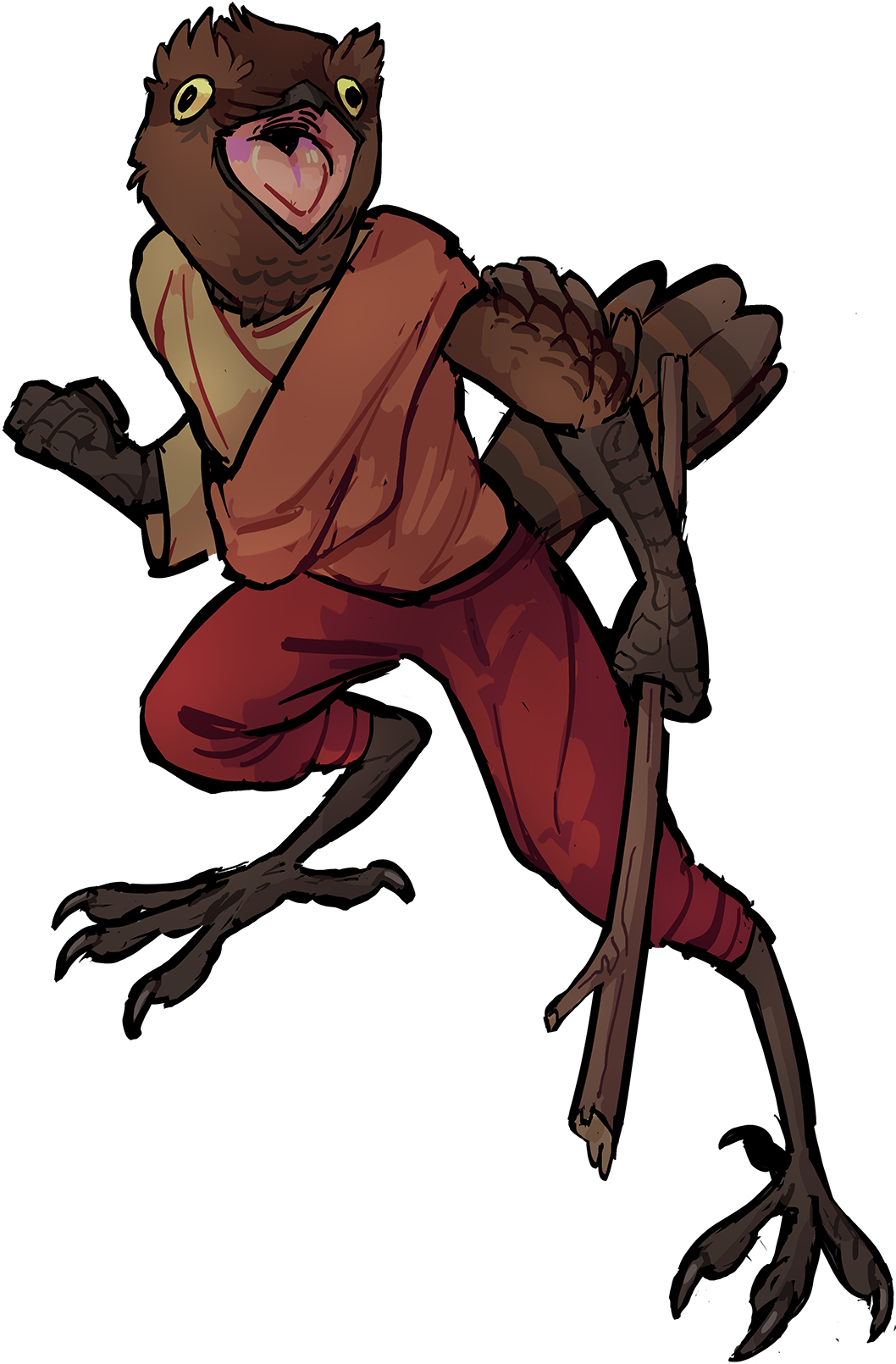
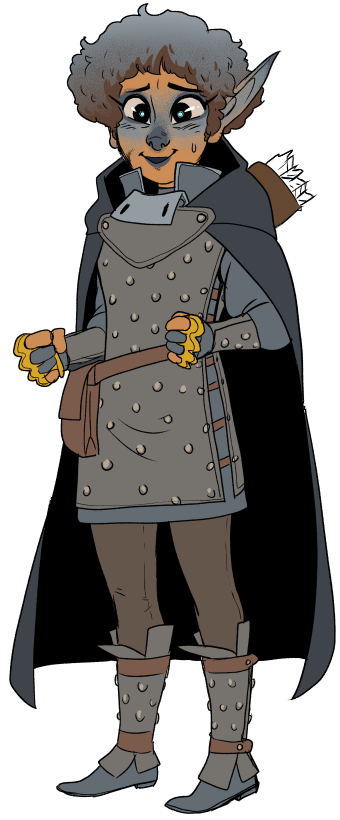
And, since the setting was built to allow a wide range of character concepts, we had a lot of very memorable weirdos in spite of the large cast. There was the teenage thief who was raised in a creepy cult, the kobold artificer from a hidden world of advanced kobolds, the potoo guy who was a mindlessly innocent murder savant, the buff goblin with the amazing hair and jorts, the ancient cleric who actively disliked her god, the guy from the fairy mafia, the elf who followed the party so that she could give them a proper burial when they died, the crystalline automaton that had been severed from some kind of collective overmind, the gunslinging frog who used to be an actual gun, the masked skeleton wizard, the mysterious moth-person who came from the moon . . . I'm such a fan of all of these characters!
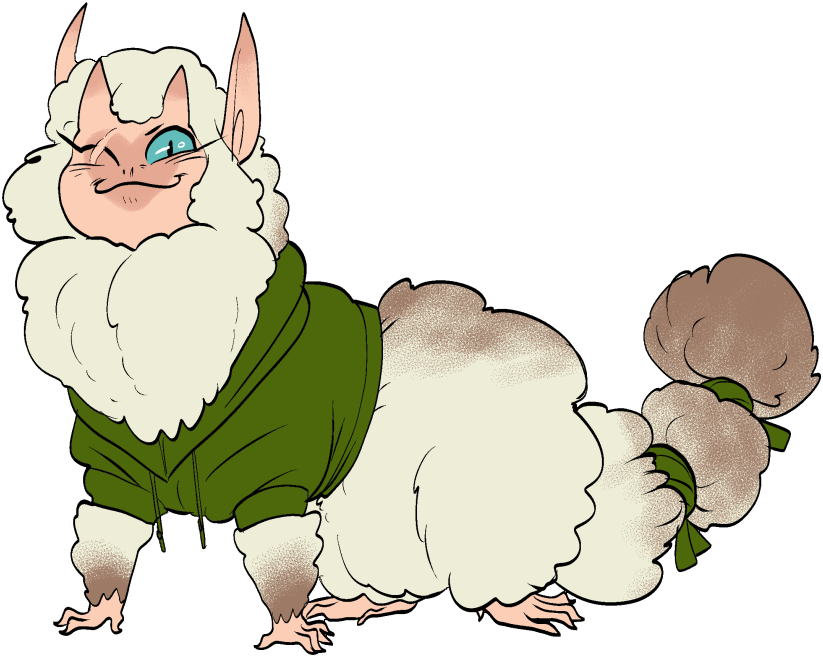
One player came up with a species of fluffy, mostly quadrupedal weasel-monkey "dragon" people, complete with art and lore, and made multiple such PCs. They're adorable and I love them.
Of course, there were also lots of characters who didn't end up getting much screen time, so they never managed to become very memorable. So it goes!
How it all went
Running the HMAC campaign, I embraced both the "lonely fun" of extensive prep work and lots of randomizer-assisted mid-game improvisation, and I remain a huge fan of both modes. In fact, one of my favorite things to do was spend lots of time between sessions building random generator things to use during the game. Naturally, these took the form of spreadsheets rather than dice tables. And even though I'm not running any games currently, I still cannibalize any lists of interesting loot or NPC personality traits or potion flavors or curse effects or whatever that I happen to come across, incorporating them into existing generators or building new ones around them.
Anyway, the generators were really useful, both in helping me to be ready when the players veered away from my prepared material, and in keeping things interesting for me. As a player or a GM, I love when one random roll changes everything, sending the session or the whole campaign in an unexpected direction. (I'll never forget the incident in another campaign where my character's actions got the whole party dumped into another plane for several sessions. The DM hadn't planned that at all; he just impartially determined the results of my foolishness and rolled with it. And that ruled.)
So, as you can imagine, I didn't do anything remotely like building out grand plots for my players to follow. Instead, I gave them loads of different things to interact with, if they were interested. I threw a stargate-like multi-destination portal into the main dungeon, along with a big list of named but undescribed destinations they could check out. I added a second, much larger dungeon and introduced wilderness travel rules to reach it (and to explore the setting in general). I made a random crypt generator and used it to produce micro-dungeons any time the less scrupulous PCs wanted to just rob a quick grave. I gave one PC a familiar (based very strongly on Arnold K's ideas about familiars) that would teach them new spells as long as they kept working towards a bizarre construction project involving exotic materials. Another PC got hold of an artifact that let him absorb curses and enchantments from others, unlocking a whole elaborate subsystem of magical pollution points.
I feel like I should be saying something like "...and that's why I couldn't keep running that campaign" here, but honestly all that high-effort stuff was a big part of what kept me interested.
Anyway, speaking of high effort: One thing about our play style that seems odd in retrospect was our near lack of downtime. Each week, I'd ask the players when they wanted play to resume after the previous session's events, and they almost always went for the morning of the following day. The poor PCs never got a weekend! They did actually have some downtime activities going on—things like learning new languages and renovating their guild house—but of course they proceeded very slowly. I probably should have encouraged a more leisurely adventuring lifestyle. In the future, I'll probably try keeping the time between game sessions the same in-game as in real life.
There were some interesting interactions between that breakneck pace, the stables of multiple PCs, asynchronous leveling, the addition of a second major dungeon site, and our strict use of an in-game calendar: We ended up with "B teams" and even "C teams" of PCs, although not necessarily in a permanent sense. If one session ended with the PCs still off on an expedition and the next session started with some of those PCs' players absent, people could just use different characters and say that this party went off on a different adventure while that last one was in progress. When the new megadungeon was introduced, the HMAC bought a house in the nearby village and started a local branch that mostly stayed local (until a dead PC had to be shipped back to Sarken for resurrection). When a new player showed up, people would break out their lowest-level characters to adventure with the level 1 newbie. It all took some bookkeeping, of course, but it worked out pretty well!
Anyway, I won't speak for my players, but I definitely had loads of fun with that campaign. We stuck with it for two years and only missed maybe a dozen sessions (mostly due to my own assorted responsibilities, I'm sure). Folks still talk about getting back to it some time. That player who started out pretty new to RPGs is running her own games now, and one of the other players became the group's primary GM for the past three years. Next time I run a game, I'm pretty likely to use a similar format. So, all around, I'd call it a success.