

The City of Wolves
One day, I daydreamed a whole fairy tale, or at least the outline for one. I don't have a good explanation for this.
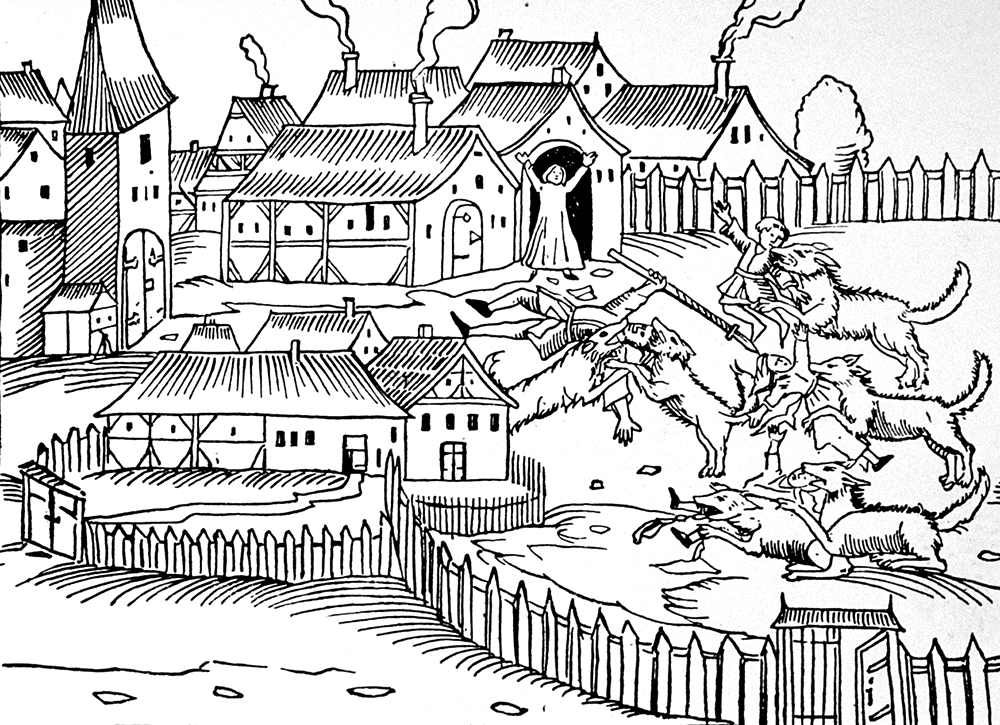
So it's known colloquially as "The City of Wolves", but that name is pretty much a massive spoiler, so on book covers and when told to children the first time, it's usually called "Ellisset and Her Siblings".
The story follows Ellisset—the sensible and dutiful eldest child of three—and her two younger siblings, whose names and genders are more variable. Let's say Ellisset is about nine, her middle sibling is a boy of about seven, and the youngest is a girl of five.
The three get lost on the way home from the market or something. They've probably got a terrible home life in the typical fairy tale mold—like their parents are dead and they're being nominally raised by a useless drunken uncle—and Ellisset basically has to function as an adult while keeping the other two in tow. Anyway, night falls and they're still on the road, and they're looking for some kind of shelter. And they find a whole town they never knew of before.
They knock at the first house they find with lit windows, and a kind woman takes them in—feeding them suspicious meat pies in some versions—and lets them all stay in a guest bedroom room. Sometimes there's a lot of focus on the exact sleeping arrangements, with the kids often getting separate beds in one room, or all sleeping in one big bed, with the youngest one being closest to the door.
Anyway, it turns out that the woman who took them in is really a wolf. She isn't described as a werewolf or a wolf in some kind of disguise, and it's not explained how, if she was always a wolf, the children ever thought she was human. Picture books take different approaches to resolving this, but the oral tradition leaves it frighteningly vague, as if suggesting that any person might in fact be a "wolf".
So, the woman-who-is-really-a-wolf sneaks into the guest room at night and either snatches the youngest child away or eats her right there in the bed. Either way, Ellisset and the middle child make up, discover in horror that their benefactor is a wolf, and that their little sister is either dead or doomed.
Ellisset and her surviving sibling escape—sometimes by jumping daringly out a window, sometimes by sneaking away quietly while the wolf eats the little girl—and start screaming for help in the dark streets of this strange town. And that leads to the big moment: Wolves start pouring out of all the buildings around them, making it clear that every citizen of this place is a "wolf"—whatever that means in the story's cultural context, and in its allegorical intent, and in the minds of its young audience.
So, Ellisset and the middle child flee through the City of Wolves. Sometimes, this scene includes gruesome or suggestive details about the nature of this place, often suggesting that the meat pies the kids were fed contained human flesh. At some point, the middle child gets caught by the wolves, and Ellisset continues on alone. Different versions put different levels of emphasis on her leaving him behind—sometimes, it's at least implied that she sacrifices him for her own escape.
In the end, the wolves corner Ellisset, but they don't eat her. Sometimes they say that they're all full from eating the younger kids, and sometimes they say that they respect how clever and ruthless Ellisset has shown herself to be. They offer her the opportunity to become a wolf, making it clear that they'll eventually eat her if she refuses. And in most versions, the story ends there, leaving the audience to contemplate how Ellisset would answer, and how they would answer in her place. In other versions, Ellisset virtuously refuses, and either dies a human child or finds some way to escape.
